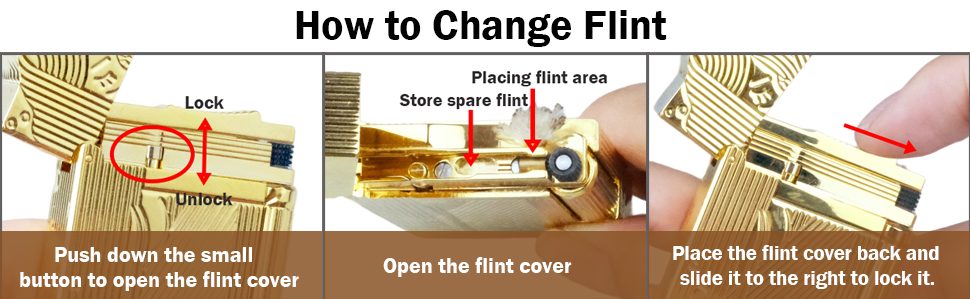
Short answer: to add a flint to a Sanji lighter, open the flint compartment, remove any worn flint dust, insert one fresh lighter flint, close the spring or cover, then test the spark before adding more fuel. Work slowly and keep the lighter away from flame while you handle the flint system.
This guide is for Sanji inspired butane and flint style lighters sold as collectible anime accessories. The exact screw, spring, or cover can vary by model, but the safe workflow is the same: depressurize, open, replace, test, and clean up. If your lighter also needs fuel, use the Sanji lighter refill guide after the flint is working.
Before you start
Use a clean table with good lighting. Keep butane cans, matches, candles, and cigarettes away from the work area. If the lighter has just been used, let it cool for several minutes. Do not press the ignition wheel repeatedly while the flint compartment is open.
| Item | Why it helps |
|---|---|
| Fresh lighter flint | Creates the spark when the wheel is turned. |
| Small flat screwdriver | Helps open a bottom screw or flint spring if your model uses one. |
| Cotton swab | Removes loose black flint dust from the channel. |
| Soft cloth | Protects the finish while the lighter rests on the table. |
Step 1: Make sure the lighter is safe to handle
Close the lid, wipe the outside, and check that there is no fuel smell around the burner. If you smell strong butane, stop and let the lighter sit in a ventilated area. A flint replacement is simple, but it should not be done while fuel is leaking or while the burner is hot.
Step 2: Find the flint access point
Most flint lighters place the flint under the spark wheel or behind a small spring-loaded screw. On a Sanji style lighter, the access point is usually near the bottom or side of the ignition assembly. Look for a small screw head, sliding cover, or spring tube. Do not force decorative panels; if a part does not move with gentle pressure, it is probably not the flint door.
Step 3: Remove the old flint or flint dust
Open the flint access point carefully. If there is a spring, keep one finger over it so it does not jump away. Tap the lighter lightly over a cloth to remove broken flint pieces. Use a cotton swab to clear dust from the channel, but do not push hard into the wheel. A blocked flint channel is one of the most common reasons a lighter clicks but does not spark.
Step 4: Insert one new flint
Place one fresh flint into the channel. Do not stack several flints unless the specific model is designed for storage. Too much pressure can make the spark wheel feel stiff and can wear the wheel faster. Reinstall the spring or cover, then tighten only until it feels secure. Over-tightening can damage the thread.
Step 5: Test the spark
Turn the spark wheel two or three times with the lid open and the burner pointed away from your face. You should see a clean spark. If there is no spark, open the compartment again and confirm that the flint is seated under the spring. If the wheel turns but feels smooth, the flint may not be touching the wheel. If the wheel will not turn, the spring may be too tight or the channel may be blocked.
Common flint problems
| Problem | Likely cause | Fix |
|---|---|---|
| Wheel turns but no spark | Flint is missing, too short, or not seated | Reopen the channel and insert one fresh flint. |
| Wheel is hard to turn | Spring pressure is too high or dust is packed inside | Clean the channel and tighten the spring gently. |
| Spark appears but flame will not start | Fuel, air, or burner issue | Use the refill and troubleshooting guides. |
| Spark is weak | Old flint, oily wheel, or worn wheel | Replace flint and wipe the wheel area dry. |
After replacing the flint
Once the spark is strong, check the fuel level and flame height separately. Flint creates the spark; it does not fix an empty tank, blocked burner, or incorrect flame setting. For everyday care, keep the lighter dry, avoid pocket lint around the wheel, and store it away from keys that can scratch the finish.
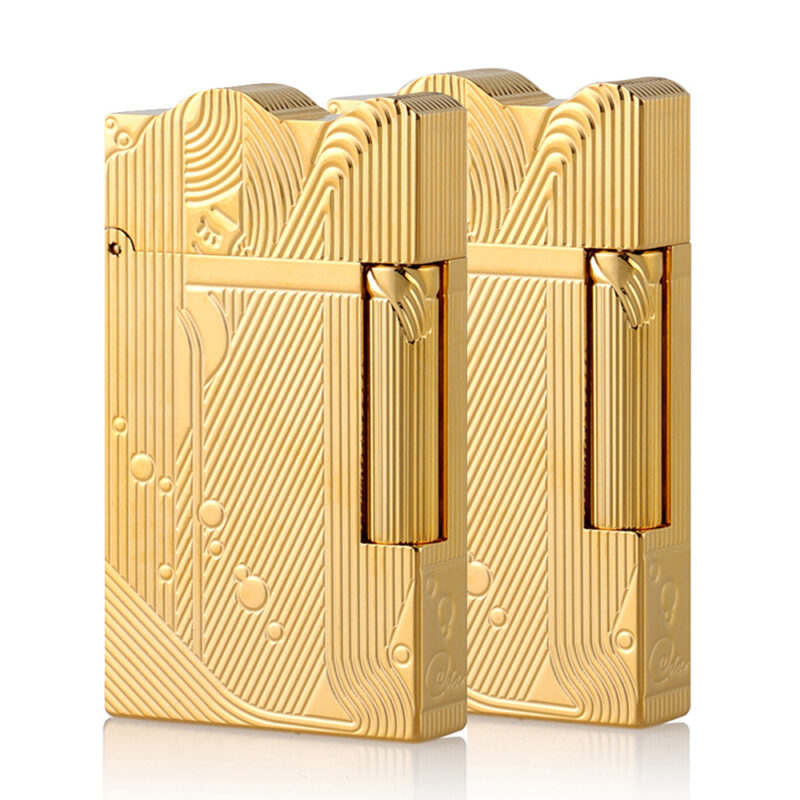
If you are choosing a new collectible lighter, compare the silver Sanji lighter, the gold Sanji lighter, or the silver and gold Sanji lighter set. For general handling tips, continue with Using Your Sanji Lighter: Practical Tips and Tricks.
FAQ
Can I use any lighter flint?
Use standard lighter flints that fit the channel. If the flint is too wide, do not force it. A stuck flint can block the wheel and make future repairs harder.
How often should I replace the flint?
Replace it when the spark becomes weak, the wheel starts feeling smooth, or the lighter clicks without a visible spark.
Should I refill butane before or after changing the flint?
Change the flint first, test the spark, then refill if needed. This separates spark problems from fuel problems and makes troubleshooting easier.